Is Outlier AI Worth It? I Analyzed Thousands of Reddit Posts to Find Out
TL;DR: Platforms like Outlier and Alignerr hook workers with $50/hr rates, then systematically cut pay once enough workers are dependent. "Oracle" status is a retention gimmick, not job security. Alignerr's "$45/hr" voice work often works out to $6.40/hr real pay. The cycle is deliberate — diversify platforms, calculate your true hourly rate, and never treat gamified status as a career milestone.
There is a specific, quiet desperation that settles in when you realize your livelihood is being managed by a math equation that doesn't know you exist. In the world of AI data annotation—dominated by giants like Outlier and emerging players like Alignerr — and underpinning it all, DataAnnotation—we aren't just workers; we are the biological components of a machine that is learning how to replace the very expertise we provide.
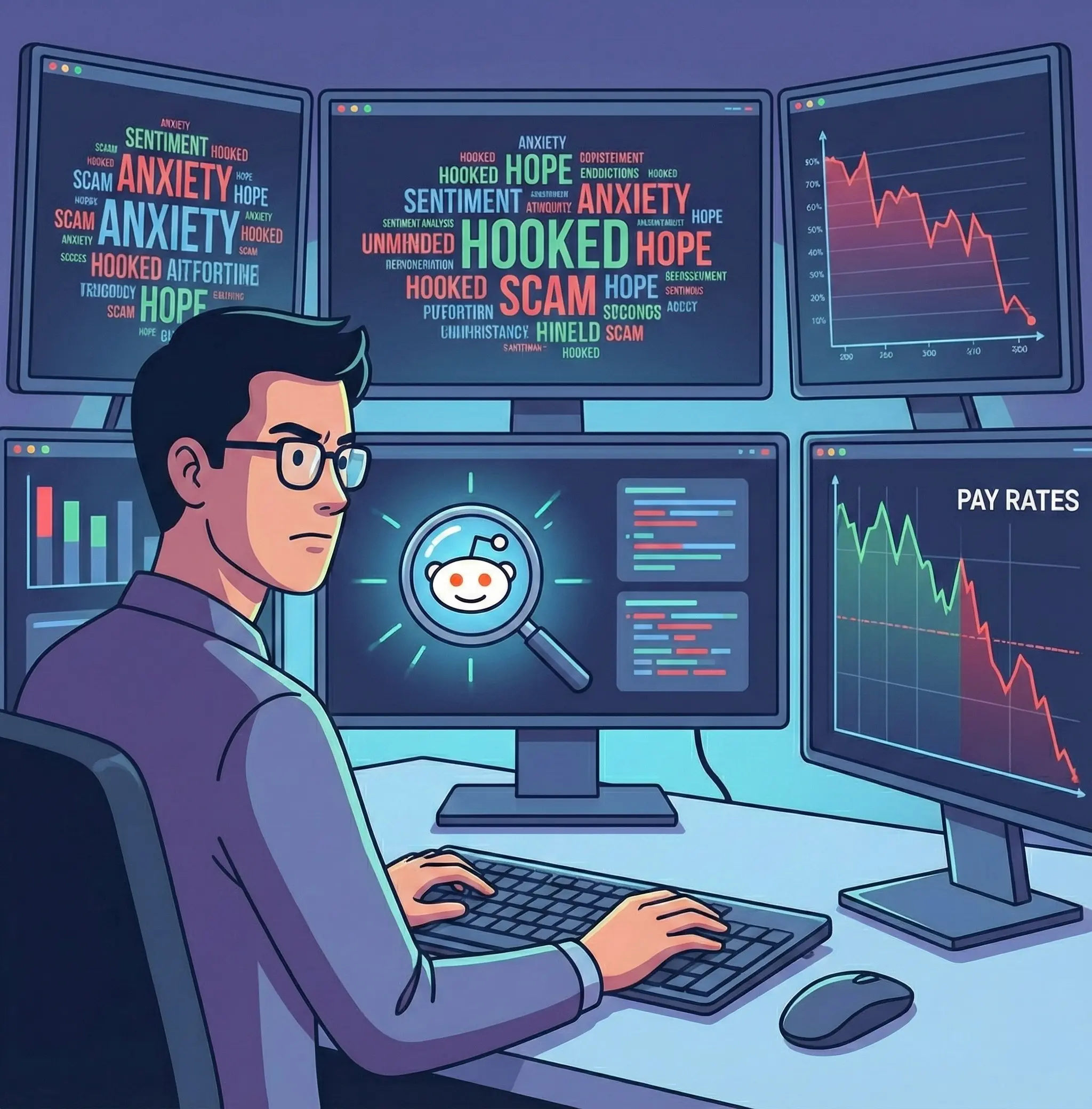
As a data analyst—specifically one who recently transitioned into the field after finishing a degree at WGU—my instinct is to look past the "vibe" and find the truth in the numbers. When I first turned my attention to the booming world of AI training, I expected to find a burgeoning new sector of the tech economy. What I found instead, buried in the digital trenches of Reddit, was a sophisticated psychological ecosystem designed to extract maximum value from workers for minimum commitment.
My deep dive took me into the most active communities for these platforms: r/outlier_ai, r/alignerr, and r/DataAnnotationTech. Any analyst will tell you that Reddit is a biased data source. It’s a self-selecting community, often dominated by those with the strongest negative experiences. However, when you move from reading individual posts to analyzing thousands of data points over months, a different kind of truth emerges. Even in a biased environment, volume creates truth.
As explored in When the Robots Stop Paying, the transition from high-value specialist to disposable data-point is often swift and silent.
The Hook: The Dopamine of $50 an Hour

your brain does a quick calculation. In a world where the average remote job might pay $18, these rates feel like a lifeline. This is the "Hook."
The platforms need high-quality data to ground their models early on. They offer "top-of-market" rates to draw in the best talent, making us feel that our years of education have finally found a lucrative home. For a month or two, it works. You buy the new MacBook, you adjust your lifestyle, and you start to rely on the "AI money."
But this high pay isn't a sustainable business model—it’s a customer acquisition cost. Once they have a sufficient volume of workers "hooked" on that income, the "market adjustments" begin. You’re no longer a specialist; you’re a "Generalist Tier 3." Then, suddenly, you’re looking at a $15/hr dashboard, wondering where the expert went. You stay because you’re a junkie for that next high-pay project that the Slack bot promises is "coming soon."
The "Oracle" Gimmick: The Illusion of Status
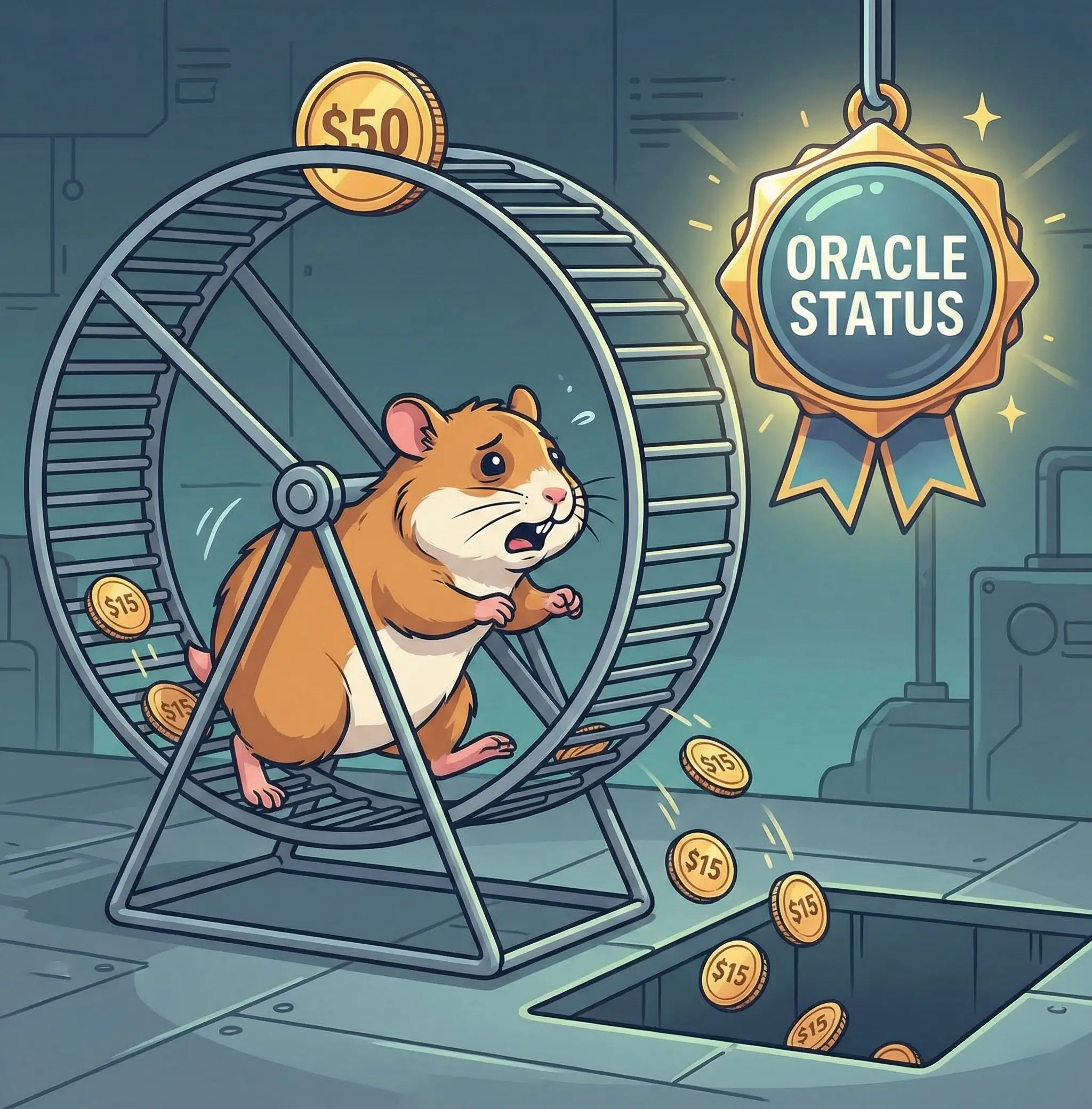
To keep us from walking away when the pay drops, the platforms have leaned into the oldest trick in the corporate playbook: Gamification.
On Outlier, the "Oracle" or "Platinum" status is treated with a level of reverence that would be hilarious if it weren't so tragic. Oracle status is a digital participation trophy designed to give the illusion of status without the reality of security. It’s a "velvet rope" in a digital sweatshop. It makes you feel like you are part of an elite tier, which psychologically discourages you from complaining about the lack of work.
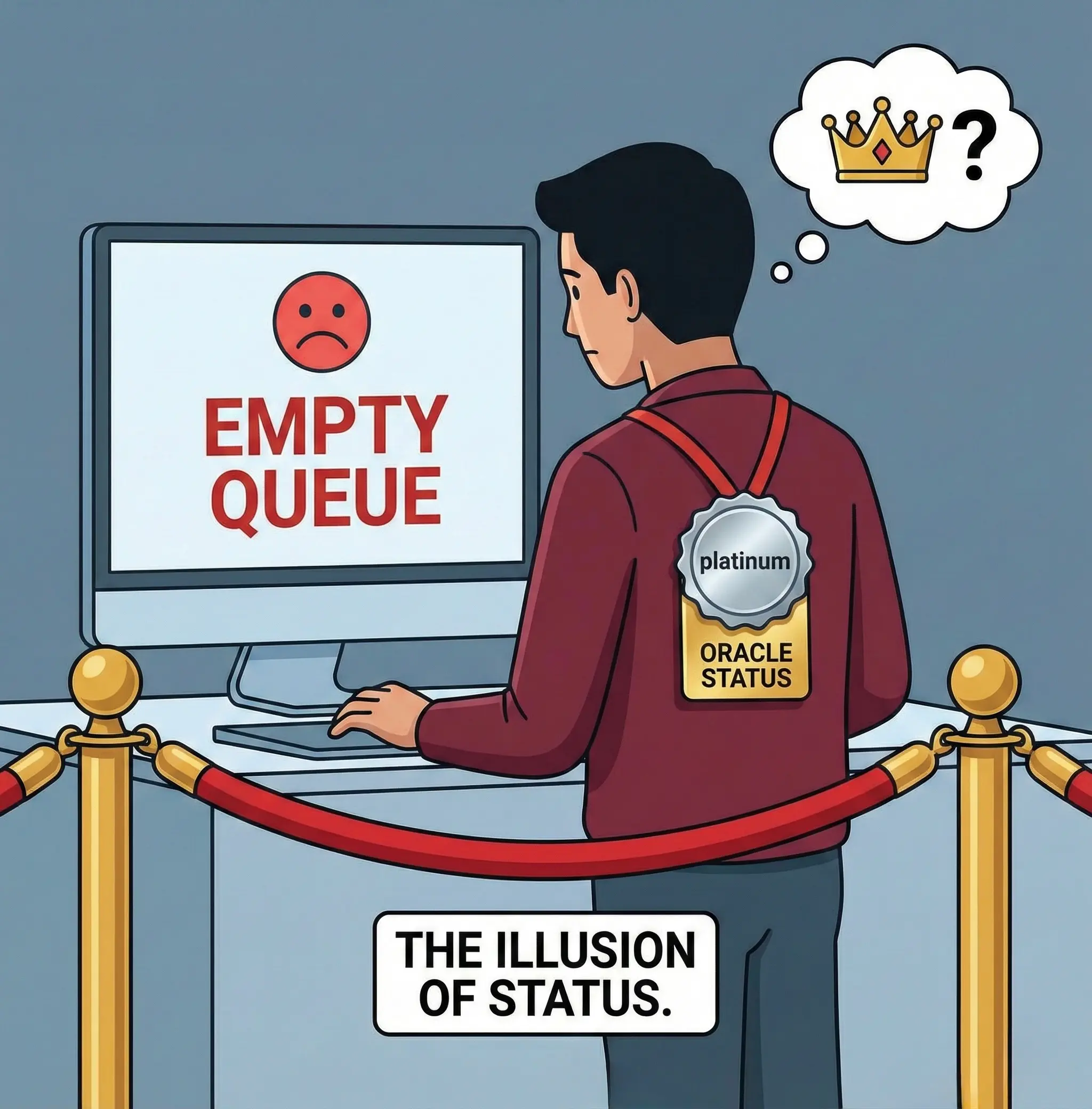
In reality, Oracle status doesn't stop the "Empty Queue" (EQ) or prevent a "soft ban" from an automated quality check. Here's exactly what happens when an Outlier account gets removed — and what to do next. It is a retention tactic meant to keep you checking the dashboard fifty times a day, providing the platform with a pool of labor they can tap into the second a client needs a rush job. They’ve replaced a living wage and job security with a gold badge and a private Slack channel where everyone is equally confused.
The Deception of Pay Transparency: The Voice Work Trap
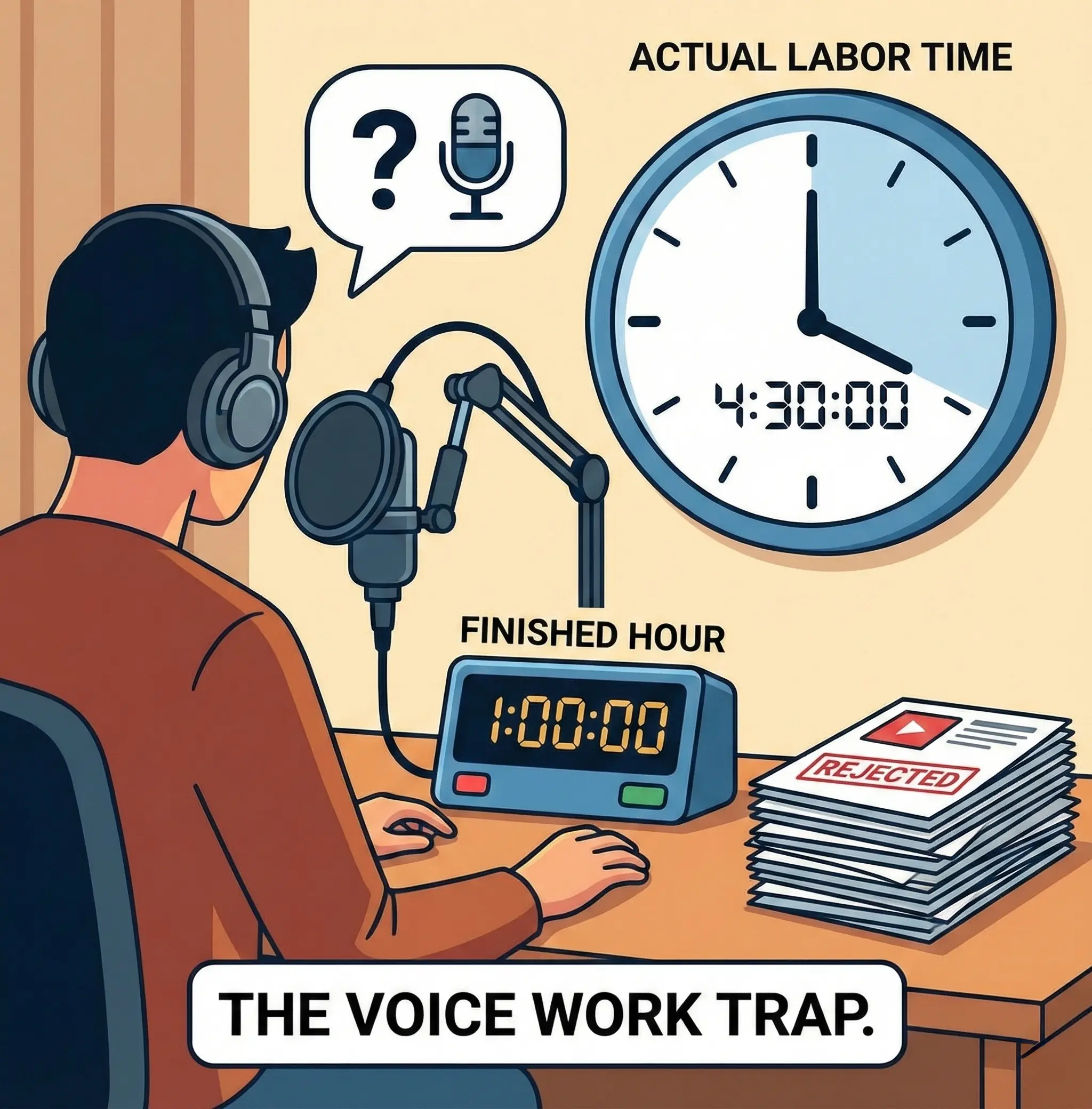
Nowhere is the deception more evident than in the "transparency" of platforms like Alignerr, especially concerning voice work. They might advertise a rate like $45/hr for voice work, but the fine print often hides a "Per Finished Hour" (PFH) model that makes the real hourly rate look like a pittance.
- Labor Time vs. Output: To get one "finished hour" of high-quality audio, you might spend four hours recording and three hours editing.
- The Math: That $45/hr "Expert" rate is actually closer to $6.40/hr.
- The Risk: By framing pay around output, they shift all the risk of technical glitches or subjective rejections onto the worker. If a reviewer decides they "don't like the tone," that is your lost money.
The Shift: From Venting to Collective Action

The narrative is changing. The subreddits are no longer just therapy sessions; they are becoming organizing hubs. The sheer volume of shared experiences has created an undeniable database of evidence. This has moved the conversation from "Is this happening to me?" to "How do we stop this?"
Lawsuits like Rogowicz v. Smart Ecosystem Inc. (targeting Outlier/Scale AI) allege systemic misclassification and wage theft. Other investigations, such as those by the Pechman Law Group, are actively seeking claimants who have been burned by these algorithmic pay cuts.
Breaking the Cycle: The Need for Digital Solidarity
We have to stop treating these platforms as "jobs" and start treating them as what they are: extractive systems. The "hook" is real. The "addiction" to the high pay is real. But the only power we have is the power to walk away or, at the very least, to stop believing the lie of the "Oracle" status.
When we stop valuing their empty titles and start demanding actual pay transparency—pay for time, not just for "perfected output"—the dynamic shifts. We are not junkies waiting for a fix. We are the architects of the most significant technology in history. It is time we started acting like it.
And one more thing: every dollar you earn through these platforms is taxable self-employment income. The IRS now uses AI to track gig economy payouts — set aside your taxes from day one.
Key Takeaways for the Data Worker
- Ignore the Labels: "Oracle" and "Expert" are retention tools, not career milestones.
- Calculate the "True Rate": Factor in your unpaid time (onboarding, troubleshooting, and editing).
- Don't "Solo-Platform": The moment you rely on one dashboard, they own you. Keep your income diversified.
Are you one of the thousands of data points in this story? Have you experienced the "hook and switch" or the "Oracle" illusion? Share your data in the comments below—let's continue to build the evidence base together.
Frequently Asked Questions
Is Outlier AI worth it in 2026? It depends entirely on your worker profile. For software engineers and ML specialists who can maintain quality scores above 95%, Outlier can pay $22–$35/hr on good weeks. For general writers or people without strong STEM credentials, the effective rate after empty queue time, unpaid task review, and guideline ambiguity often falls to $12–$18/hr — less than you'd make doing something boring at a warehouse with predictable hours. The biggest risk in 2026 is account instability: removals happen without explanation and there is no appeals process. Apply, earn what you can, but never let it be your only income.
How much does Outlier AI actually pay per hour? Outlier advertises $15–$50/hr. Community-reported effective rates after accounting for unpaid time (queue monitoring, guideline review, dispute resolution) run closer to $12–$35/hr depending on project and skill tier. The $50/hr rate is real but rare — it applies to advanced coding evaluation and specialist tasks, not general annotation. New workers typically see $12–$18/hr in their first 60 days. The per-task article I maintain at /blog/outlier-ai-pay-per-task-2026 breaks down current rates by task type.
What is Oracle status on Outlier AI — does it mean anything? Oracle is Outlier's top-tier quality designation. Workers with Oracle status get access to higher-paying projects and are less likely to have tasks removed from their queue during slow periods. What it is not: job security. Oracle workers get account-removed at the same rate as everyone else when Outlier decides a project is done. Chasing Oracle status by refusing low-quality tasks to protect your score is a reasonable strategy. Treating it like a promotion is not. It's a retention mechanism — a label that makes you feel stable when you aren't.
Has Outlier AI been cutting pay in 2026? Yes. The rate compression since December 2025 is documented and not disputed. Multiple projects that paid $28–$35/hr in early 2025 were restructured to $18–$22/hr by Q1 2026. The mechanism is simple: more workers qualify for projects than Outlier needs, so they lower rates. Workers who have accumulated high quality scores often find themselves earning less on restructured projects than they made 12 months ago. This is not a glitch — it's the intended operation of a labor supply surplus. When The Robots Stop Paying covers the economics of why this keeps happening.
Is Outlier AI legit or a scam? Outlier AI is legitimate — it is operated by Scale AI, a multi-billion dollar AI infrastructure company. The pay is real, the tasks are real, and the income is real. The frustration workers express comes not from fraud but from the structural conditions of algorithmic management: no transparency, no appeals, no human HR to talk to. Outlier is not a scam. It is a labor market operating exactly the way its designers intended — which happens to be, for workers, a situation with very little power and very little recourse.
Resources for Data Workers
- Pechman Law Group: AI Wage Theft Investigation
- ClassAction.org: Outlier and Scale AI Lawsuit Updates
- Together on AI: Join the Privacy and Labor Class Action
- Get The List: Top AI Opportunities for 2026
- What Do These Platforms Actually Pay? The Real Numbers
- Outlier AI Empty Queue: Why Tasks Disappear and What To Do Next
Everything we track on Alignerr: pay, reviews, and how to apply
Read Next
From the community
Join the conversation — no email needed →What workers are talking about
Comments
Leave a comment
Joshua Drake has worked on AI training platforms for over four years, tracking earnings, sentiment data, and platform stability across Outlier, DataAnnotation, Alignerr, and others. He has a degree in data analytics and runs this site, breakingeven.online and the sentiment analysis used to derive a sense of what is happening in a world often hiding in the shadows.